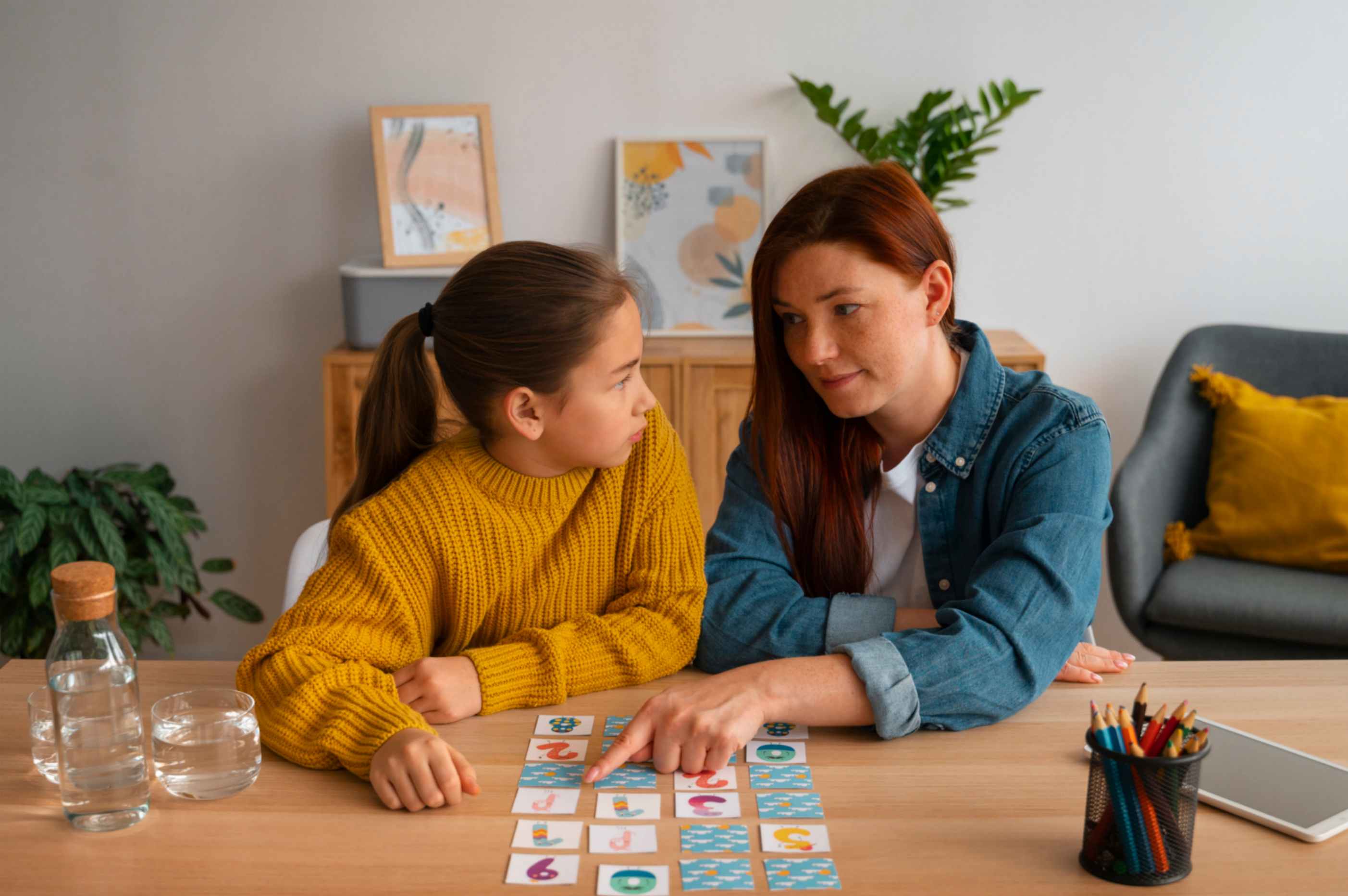
Problem-solving is a skill that is important for children to develop, as it enables them to understand situations, make decisions, manage problems, and become more independent. For some children, there may be a need for further support in their learning to respond when things do not go as expected. ABA therapy can offer opportunities for practicing these skills in real-world scenarios.
ABA therapy for children can be tailored to find out what skills a child already has and then work on expanding these skills, using individualized approaches. Therapy can support a child to understand how to approach a problem, consider options, and choose a response rather than just being told what to do.
What Are Problem-Solving Skills for Children?
Problem solving is not just about getting the correct solution. The following skills are used in children when:
- Seek assistance when they need it
- Select from options
- Use steps to accomplish a task
- Understand and manage routine changes
- If the first one doesn't work, try another one
- Determine what was not done correctly
- Communicate their needs
- Handle typical situations in an appropriate manner
For other children these skills come with the familiar surroundings of everyday life. Others might need hands-on teaching and practice.
How Does ABA Therapy Support Problem-Solving?
Individualized goals and structured learning opportunities are used in ABA therapy to teach specific behaviors and skills. A therapist can split up an activity that is difficult and explain to the child how to respond to each step.
If a child cannot put a puzzle together, for instance, the therapist can teach the child to first observe the pieces they have available and then select one piece and attempt to put it in place and then select another strategy if it doesn't fit. As time goes on, the child can be taught that if the first strategy doesn't work, then the next one is a suitable way to respond.
Such practice can help to understand and apply problem-solving.
Teaching Children to Identify Problems
Children must first identify a problem before they can attempt to solve it. Children can learn to recognize common situations that call for a response using ABA behavioral therapy.
Simple activities and real-life scenarios can be used by a therapist to teach concepts such as:
- Something is missing
- A task is not working
- A preferred item is unavailable
- A routine has changed
- A child needs assistance
The aim is to enable the child to identify the situation and to see what they can do next.
Encouraging Children to Try Different Solutions
Sometimes children can be frustrated if the first attempt is not successful. ABA therapy can offer a chance to work on using another strategy.
For example, if your child has difficulty opening a container, they can try again, change their grip, or ask for support. The therapist might not do the task for the child but offer a bit of support and ensure the child is involved in solving the problem.
Children can start to realize that if they do not succeed at something, it doesn't mean that it cannot be done again.
Building Communication into Problem-Solving
Communication is linked to problem-solving. If a child can express himself, he can find more ways to react to difficult situations.
Communication goals can be included in the everyday activities of an ABA autism therapy program in Charlotte, NC. This may be asking for assistance, requesting an item, making a choice, saying something is hard or saying they need a break, depending on the individual child's needs.
These skills can provide children with some practical options to avoid getting frustrated when they are faced with a problem.
Practicing Problem-Solving in Everyday Situations
Children will have better opportunities to practice skills in familiar surroundings and use skills more readily. In home ABA therapy in Charlotte, NC, can be conducted during activities like getting dressed, setting the table for dinner, putting away toys, doing homework, or even organizing toys, which are all areas where problem-solving skills can be practiced.
If a child's favorite toy is not available, for instance, a therapist can help him practice choosing an alternative activity. The therapist can divide a task into smaller steps and step-by-step encourage the child to become more independent if they have trouble completing the task at home.
The everyday moments can become meaningful learning moments.
How In Home ABA Therapy Can Support Independence
The home environment is where many challenges occur naturally, and ABA therapy can be practiced in the home. The therapist can use routines and activities that relate to child's daily life.
This may include learning how to:
- Take a series of steps
- Make simple decisions
- Ask for assistance
- Handle changes
- Try alternative solutions
- Complete familiar tasks with less support
Support can then be modified based on the child's progress, as they become more comfortable with these skills.
Individualized ABA Therapy Matters
All children are unique in their strengths, communication skills, interests, and needs for further support. This means that problem-solving objectives must be tailored to each child and not the same for each child.
ABA therapy providers can evaluate the skills a child is already performing and develop goals based on the skills that are most relevant to the child. Therapy can then be modified to suit the child's learning and development.
A child that requires some assistance to communicate a problem may have varying objectives from a child that knows the problem but doesn't consider alternative solutions.
Wrapping Up
Problem-solving may help children to deal with everyday problems, make decisions, express their needs, and become more independent. ABA therapy offers a structured environment where these skills can be practiced in different individualized activities and in real-life situations.
With regular instructions and practice, children can learn to identify issues, search for alternative solutions, seek support when they need it, and react appropriately when things go wrong. ABA therapy in Charlotte, NC, can be customized for every child and may be incorporated into therapy sessions and in the home. Contact us today to learn more about our ABA behavioral therapy.
.jpg)